How much does outdoor advertising cost?
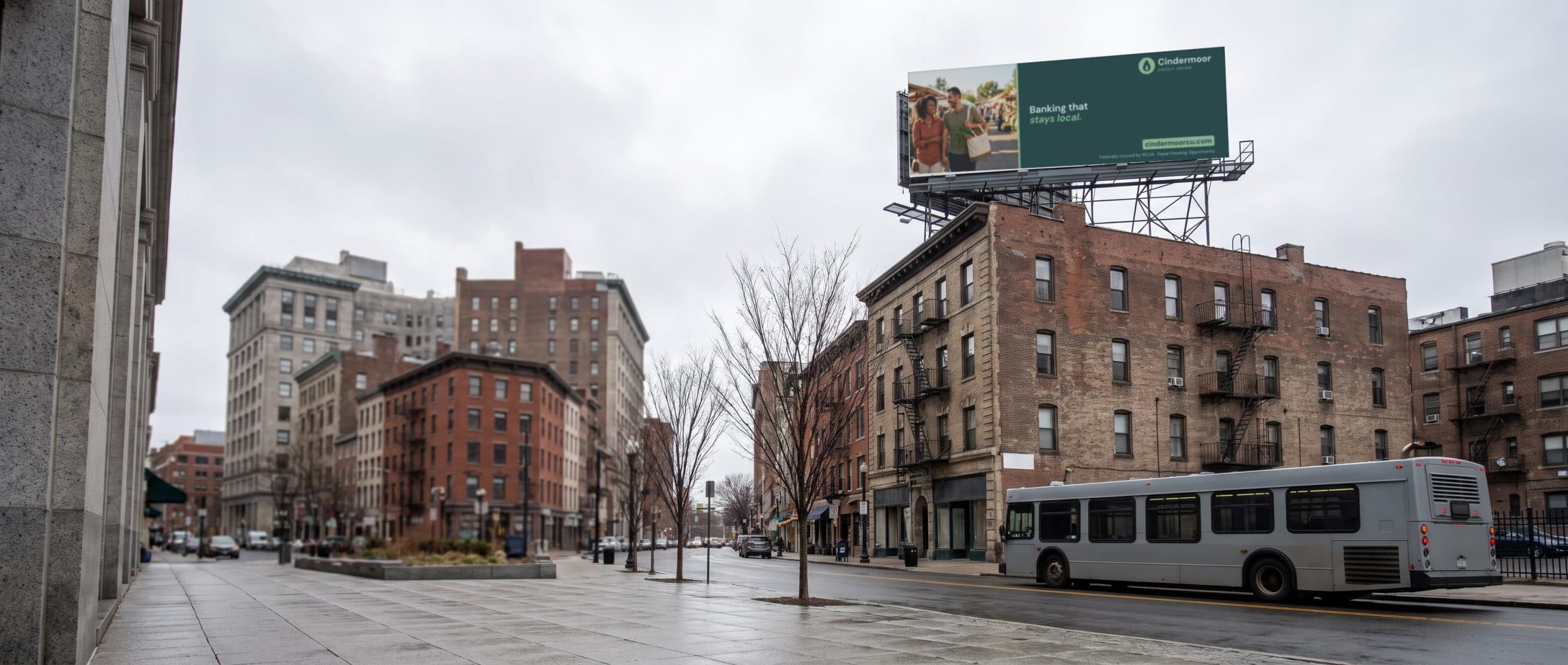
It depends on the format more than anything else. A bench ad in a small city is listed at $100 a month. A large bulletin in a big market is listed at up to $30,000 for four weeks. Everything else falls somewhere in between.
Most guides price one format and stop. That makes it hard to size a first budget, because you can't see a bench next to a bus next to a billboard. So here is the whole ladder on one table. Each row shows how the format is sold, a published range, where the number came from, and a link to our full guide for that format.
Two notes before you read it. Every price comes from someone else's public page or rate card, and we did not buy any of these to test them. And units differ. Billboards sell per 4 weeks, transit agencies per month, mobile trucks per day. We kept each source's own unit instead of converting it.
| Format | How it's priced | Published range | Source | Full guide |
|---|---|---|---|---|
| Billboard bulletin (large static) | Per display, per 4 weeks | $1,500 to $30,000 | Blue Line Media | Billboards |
| Billboard poster (medium static) | Per display, per 4 weeks | $750 to $4,000; junior posters $300 to $750 | Blue Line Media | Billboards |
| Digital billboard slot | Per slot in a loop, per 4 weeks; or per play | $3,500 to $25,000 (large), $2,000 to $5,000 (medium); per play from $0.01 | Blue Line Media; Blip | Digital billboards |
| Bus exterior (King, Queen, rear) | Per bus, per month | King $355 a month, down to $300 on 12 months; Queen $300 to $230; rear $230 to $175 | GRTC rate card | Bus ads |
| Full bus wrap | Per bus, per month, plus production | $3,000 a month, down to $2,350 on 12 months; $8,000 production | GRTC rate card | Bus ads |
| Bus interior cards | Per package or per month across the fleet | $2,250 for 28 cards on 7 buses for 3 months; $200 to $400 a month fleet-wide in a small city | GRTC rate card; MET Transit | Bus ads |
| Bus shelter | Per shelter, per month | $495 a month, down to $440 on 12 months; $300 production | GRTC rate card | Shelters |
| Bus bench | Per bench, per month or 4 weeks | $100 street side, $150 double sided a month; $100 to $450 per 4 weeks in one guide | MET Transit; AdQuick | Bench ads |
| Mobile billboard truck | Per truck, per day (8 hours) | Static $500 to $900; LED $800 to $1,500; LED $14,000 to $28,000 a month | The Rolling Ads | Mobile billboards |
| Truck-side ads on freight fleets | Per truck, per week or month | $400 to $900 a month per delivery truck in one guide; most sellers quote on request | AdQuick; OAAA | Truck-side ads |
| Vehicle wrap (your own vehicle) | Production only, one time | Full wrap: sedan $2,500 to $4,500; cargo van $3,500 to $6,500; box truck $4,000 to $8,000 | Hyperformance Graphics | Vehicle wraps |
| Taxi and rideshare | Per display, per 4 weeks | Taxi top $200 to $500; digital taxi top $400 to $600; rideshare digital top $450 to $750 | Blue Line Media | Taxi and rideshare |
| Garbage truck panel | Priced by city | Talk to us for pricing | No city is open yet | Garbage truck ads |
Prices as published by each source; ranges vary by market and date.
Minimums matter as much as the range. Blue Line Media lists a $5,000 minimum per market for billboards and a $5,000 minimum for taxi and rideshare, which can be spread over displays and periods. Richmond's transit agency has a $1,000 minimum buy. A cheap unit can still come with a floor you have to clear.
What decides the price of an outdoor ad?
The same size of board can cost very different amounts in two cities. A handful of things move the number, and they apply to almost every format on the table.
- Market size. Big cities cost more. The Rolling Ads says major metros like New York, Los Angeles, Miami and Chicago sit at the top of each range, and smaller markets at the bottom.
- Location and traffic. A board on a freeway costs more than one on a side road in the same town. The seller prices the spot by how many people pass it.
- Size of the unit. A bulletin costs more than a poster, and a poster more than a junior poster. On a bus, a King costs more than a Queen, and a Queen more than the rear panel.
- Length of run. Longer terms lower the monthly price. Richmond's King panel drops from $355 for one month to $300 on twelve.
- Share of a digital loop. On a digital screen you rent a slot that rotates with other advertisers. More slots, or a shorter loop, costs more.
- Season and demand. Blue Line Media says its ranges depend on timing, duration and market. Ask which months cost more in your market.
- Production and install. Printing, posting and wrap production are usually separate lines on the quote.
- Permits. In California, Caltrans licenses outdoor advertising companies and permits their displays along state highways. When you rent a face, the sign company holds that paperwork.
Production and installation
This is where first-time buyers get surprised. One guide puts vinyl printing at roughly $1.50 to $3.00 a square foot, which works out to about $500 for a standard 14 x 48 bulletin. Posting runs $200 to $1,000 per posting, and swapping a static design later adds roughly $700 to $1,500 each time.
Transit is the same story. Richmond lists production at $155 per bus for a King, $140 for a Queen and $8,000 for a full wrap, on top of the monthly rate. Bench vinyl is cheaper: one guide puts it at $25 to $75 per panel. A mobile billboard truck's static sign runs $300 to $800 to print. Ask for the production number in writing before you compare two quotes.
Outdoor advertising CPM: cost per thousand by format
CPM is the cost per 1,000 impressions. Geopath, the industry's audience-measurement body, defines it as the cost of delivering 1,000 impressions from people who see the ad. It's a simple way to put a bench and a big bulletin side by side and ask which one costs less per estimated chance to be seen.
The most-cited public chart is Solomon Partners' 2025 Major Media CPM Comparison, which the OAAA posts on its site. Its outdoor numbers come from contracts run through the DOmedia buying platform. Here is what it shows for the outdoor formats it covers.
| Format | Estimated CPM range | Source |
|---|---|---|
| Bulletins | $3 to $10 | Solomon Partners 2025 |
| Posters | $3 to $9 static; up to $13 for non-static | Solomon Partners 2025 |
| Transit shelters | $2 to $7 static; up to $8 for non-static | Solomon Partners 2025 |
| Digital place-based media | $7 to $16 | Solomon Partners 2025 |
Solomon estimates as of June 2025, read from the published chart. Outdoor figures are based on contracts executed through DOmedia.
For context, the same chart puts primetime broadcast TV at $45 to $49 and social media at $2 to $8. On these estimates, outdoor is among the lower-cost paid media per thousand.
Now the catch. A CPM is a model, not a count. Geopath says its impressions are adjusted from traffic counts to estimate the people likely to notice the ad. Nobody stands at the board with a clicker. That's fine for comparing formats, but don't read a CPM as a promise of what one board will do for you.
Some formats have no audited CPM at all. Geopath's transit ratings cover bus exterior, bus interior, station, rail interior and ferry interior media. Refuse trucks are not part of the industry's audited audience ratings, so we don't give a CPM for garbage truck panels.
How much does a digital (LED) billboard cost?
On a digital billboard you rent a slot, not the screen. Your ad plays in a loop with other advertisers. Blue Line Media lists $3,500 to $25,000 per four weeks for one display on a large digital bulletin and $2,000 to $5,000 on a medium digital poster. Blindspot's 2026 guide puts digital boards at $1,200 to $15,000 per cycle.
One seller's worked example shows how a slot is sold: one 8-second spot in a 64-second loop for $4,000 over four weeks, with eight advertisers rotating. Self-serve marketplaces go smaller still. Blip sells single 8-second plays starting at $0.01 with no minimum and no contract, priced by location, time of day and demand.
One seller says digital boards carry a 30 to 50 percent premium over static. On the other hand, there's no print bill and no posting fee, and you can change the message without a crew. For the full breakdown of DOOH advertising rates, read our page on digital billboard advertising.
How to budget your first outdoor campaign
We won't hand you a magic number, because the right budget depends on your city and your goal. But the steps are the same for a plumber, a law firm or a car dealer.
- Pick the goal and the streets. Calls from homeowners on the east side of town is a goal. Brand awareness is not. The goal tells you which formats and which streets make sense.
- Pick a format your budget can run for several periods. One month on a big board and then nothing rarely tells you anything. Three or more periods on a smaller unit gives you a fair read.
- Add production. Printing, posting, wrap production and design go on top of the space. Get the number in writing.
- Add a tracking number. Put a phone number on the ad that appears nowhere else. Every call to it came from the ad.
- Compare quotes on the same unit. Same size, same 4-week period, production included. Then compare the CPM if the seller gives one, and ask how it was estimated.
If a seller quotes per day and another per 4 weeks, don't multiply the day rate yourself. Weekly and monthly commitments often cut the daily rate by 15 to 30 percent on mobile trucks, so ask for the long-run price directly.
Watch the minimums too. A format with a low unit price can still have a market minimum that sets your real entry point. Ask for that number in the first conversation.
For a side-by-side look at the cheapest ways in, read cheap billboard advertising. For truck formats specifically, read what truck advertising costs.
Does outdoor advertising still work?
For a lot of advertisers, yes. People still drive, and they still notice what's on the road. But the best proof is your own tracking number, not anyone's study.
The studies that exist mostly come from the industry. A 2019 Nielsen survey published by the OAAA found 90 percent of US travelers noticed outdoor ads in the past month, and 81 percent of adults surveyed noticed a billboard. That's noticing, not remembering or buying. In 2026 the OAAA and Kochava reported a median lift of 20 percent for in-person outcomes and 14 percent for digital outcomes, against about 10 percent for TV. That study was funded by the industry's own research foundation, so read it as industry-funded.
Neither study tells you what one board in your town will do. Run it for a few periods with a number nobody else has, and count. For the longer answer, read are billboards worth it.
Where garbage truck panels fit on the ladder
Garbage truck advertising is a framed sign on the side of a city refuse truck, not a wrap. The printed panel slides out of the frame. The live area is 91 x 27 inches, and there are two sides per truck.
It sits on the ladder as its own row because it works differently from a billboard or a mobile truck. The truck runs the city's collection routes as part of its normal job, and trucks rotate, so there is no route guarantee. You aren't renting a truck to drive around. You're on a truck that is already out working.
The printed panel swaps in under 30 seconds. A new message still goes through design, review and printing first. In each city, every ad will be checked against that city's written ad policy before it runs.
On price, we don't list one. Pricing is set city by city, and no city is open yet. On reach, refuse trucks are not part of the industry's audited audience ratings. Any reach figure we show will be labeled as an estimate, with how we got it. Add a tracking number to your panel and count your own calls.
If that sounds like a fit next to the formats above, read how garbage truck advertising works, compare it in what truck advertising costs, or see your ad on a garbage truck first. For all the formats in one place, start with the types of outdoor advertising.
Sources
- Blue Line Media (seller): Billboard advertising rates
- Blue Line Media (seller): Taxi and rideshare advertising rates
- Blindspot (seller): How much does a billboard cost, July 2026
- AdQuick (seller): How much does a billboard cost
- AdQuick (seller): Bus bench advertising
- AdQuick (seller): Mobile billboard advertising
- Blip (seller): Pricing
- Smart LED Signs (seller): LED billboard advertising rates
- Greater Richmond Transit Company: Advertising rates (updated October 2024)
- City of Billings, MET Transit: Advertise with MET Transit
- The Rolling Ads (seller): Mobile billboard pricing guide 2026
- OAAA: Truckside fleet displays
- Hyperformance Graphics (wrap shop): Vehicle wrap cost 2026
- Solomon Partners, via OAAA: 2025 Major Media CPM Comparison (PDF)
- Caltrans: Outdoor Advertising program
- Geopath: Glossary
- Geopath: Transit FAQs
- OAAA (industry association): OOH delivers 2x the performance lift of TV, with Kochava, May 2026
- OAAA (industry association): Nielsen study, more than 90% of US travelers notice OOH, May 2019
Written by
Roadway Displays
Roadway Ad Network is a business line of Roadway Displays, which has built sign frames for refuse and recycling trucks since 1987. We make the frames and print the panels ourselves.
Published · Updated · About us