What outdoor advertising is
Outdoor advertising is advertising in public places. The audience is on the move: driving, riding, walking, waiting for a bus.
The industry groups formats by where the ad sits: roadside boards, transit such as buses and shelters, and vehicles such as trucks, cars and taxis. We do not sell most of these. We explain them because buyers deserve a fair picture before they spend.
Types of outdoor advertising, ranked by how each is bought
From the shortest commitment to the longest. Each format links to its own page with sourced costs.
- Digital billboards: bought by the play or by the slot. Self-serve marketplaces charge only when your ad plays, with no long-term contract. A fixed slot in the loop usually runs four weeks.
- Mobile billboards: bought by the hour, day or month. One seller sets an 8-hour daily minimum.
- Billboards: bought one board face at a time, per four-week cycle.
- Taxi and rideshare ads: bought per car, per four weeks, with 4 to 12 weeks a typical minimum.
- Truck side ads: bought by the truck, in one to 52 week increments.
- Vehicle wraps: on a driver network, bought by the car and the month, on terms such as 12, 24 or 52 weeks.
- Bus shelters and benches: bought per shelter panel or bench, by the month or four-week flight, from the transit agency or the company it hires.
- Bus ads: bought per panel for a term, often in packages. One agency requires a six-month contract.
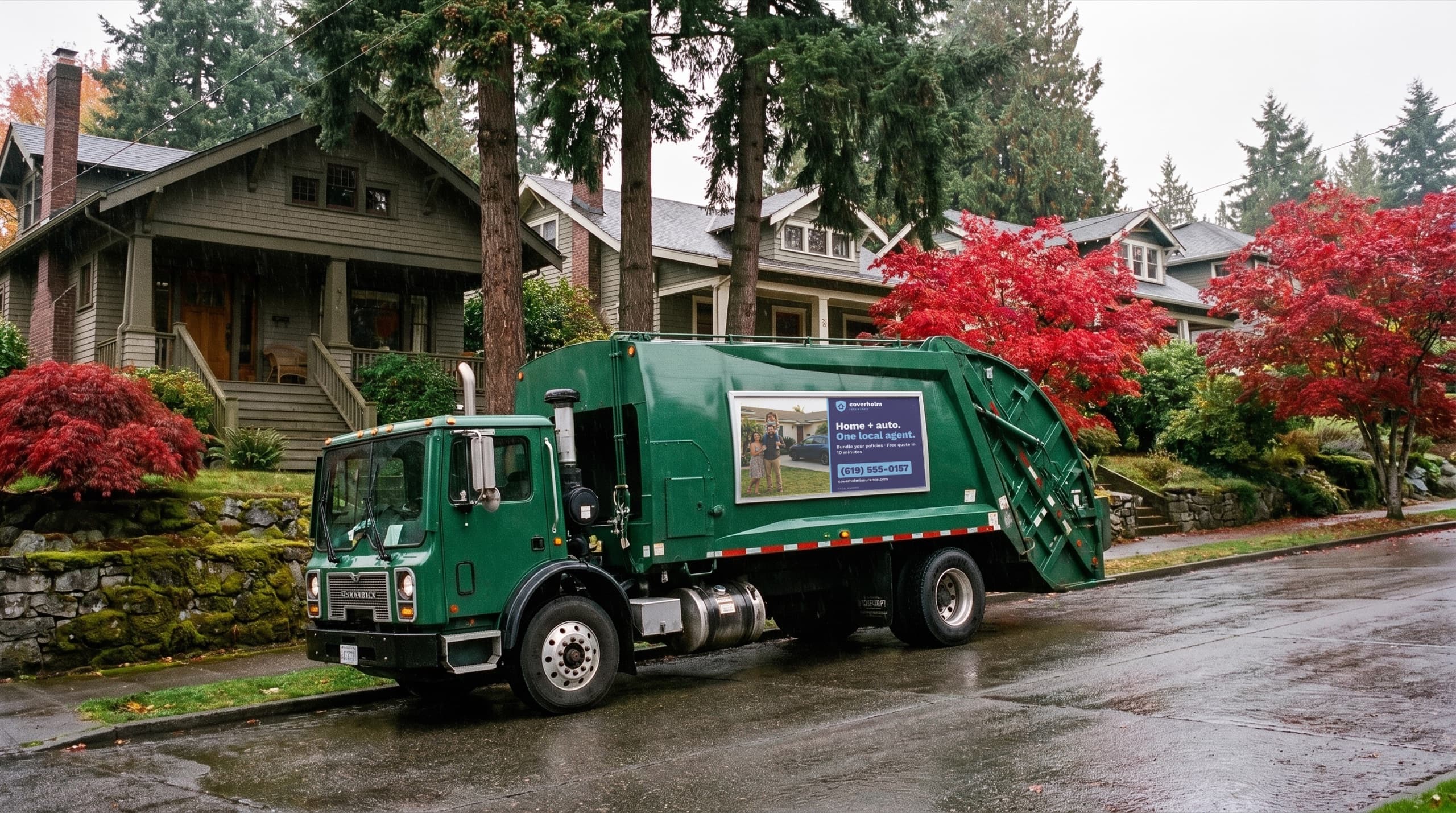
- Garbage truck panels: a framed printed panel on a city refuse truck, opening city by city. No city is open yet.
How to choose an outdoor format
- Budget. Entry prices run from about $100 a month for a bench ad to thousands for one digital screen.
- Local or regional. One service area wants a format you can aim, such as a poster on one road or a truck routed through set blocks. A regional brand wants spread: many buses, cars or boards across a metro.
- How often the message changes. A fixed message suits a printed board or a bus panel on a long term. A message that changes with the season suits a digital screen. A change on a printed bulletin costs print and posting money, about $700 to $1,500 per swap.
- How you will measure it. Decide before you buy. If you cannot count calls or visits from the ad, you will not know whether it worked.
Outdoor advertising formats compared
For a budget ladder across every format, read our guide to outdoor advertising cost.
Rates vary by market and date. These are published list ranges, not offers. Real prices are negotiated, and many sellers quote case by case.
A framed printed panel on a city garbage truck is a newer format. The printed panel swaps in under 30 seconds, so the message can change by month, though a new message still goes through design, review and printing first. No city is open yet, so join the list for your city.
An honest note on measurement
Some formats have audited audience ratings and some do not. Geopath publishes them. Its transit list names bus exteriors and station formats, and its glossary explains how roadside units are counted. We found no Geopath ratings for mobile billboard trucks, truck sides, car wraps, taxi tops or rideshare toppers.
A rating tells you how many people could see an ad, not who called. For every format, use a phone number and a web address that appear on that ad alone, ask "How did you hear about us?" on every call and form, and compare calls before, during and after the run. Treat any view figure a seller quotes as an estimate, and ask how it was made.