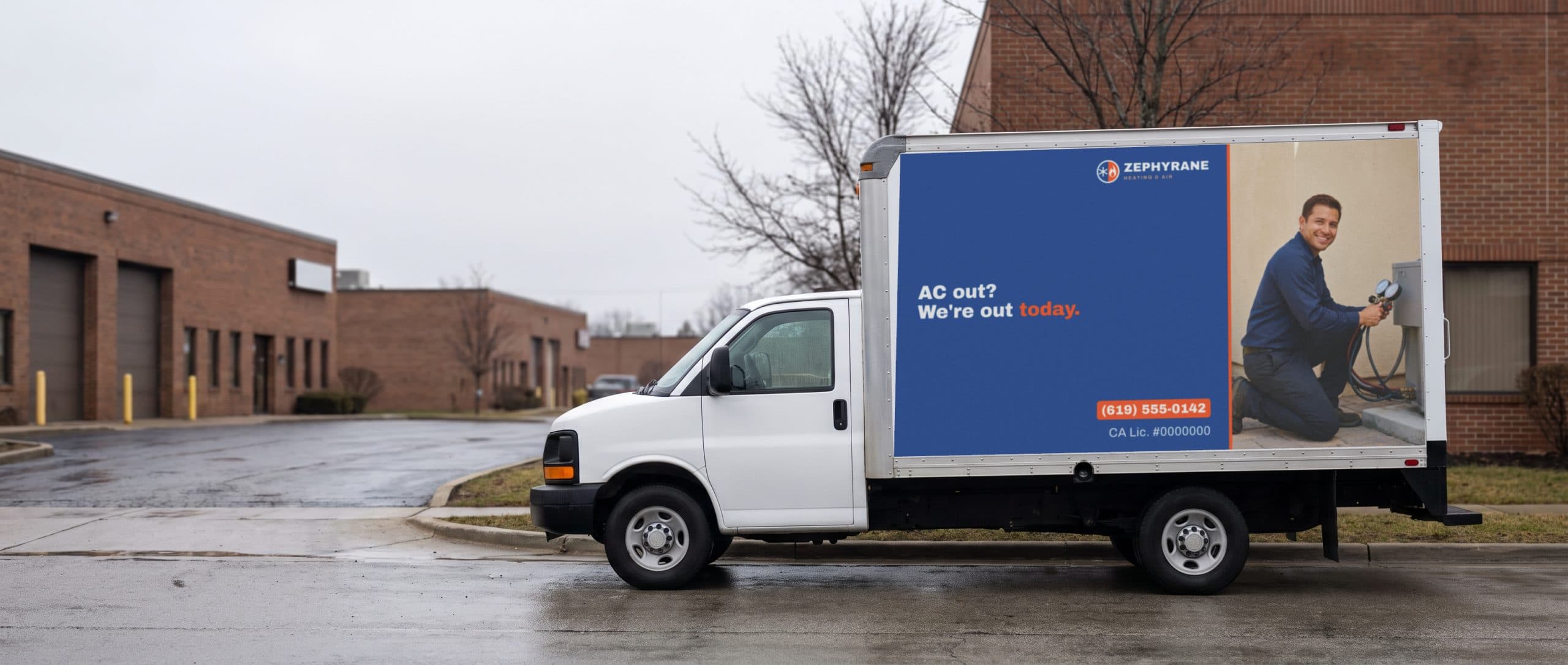
Four formats, side by side
Most guides price a rented truck by the day and stop there. That makes it hard to compare with a bus ad or a wrapped car, which sellers quote by the month. So here are all four, with the price each seller or transit agency publishes and a link to the source.
Two notes on the numbers. First, every price in this table comes from someone else's public page or rate card, on the date shown there. We did not test any of them, and prices change. Second, we did not turn a per-day price into a monthly one. Sellers quote a month-long campaign differently from a single day, so we show the source's own per-day figure and say so.
| Format | Published prices | How it is quoted | Sources |
|---|---|---|---|
| Mobile billboard trucks (a rented truck drives a route) | Static trucks: $300 to $700 per truck per day. Digital trucks: $700 to $1,800 per truck per day (Movia). Digital LED trucks: $1,000 to $1,500 per day on 30-day campaigns, and $1,800 and up for one day (Can't Miss US). | Per day. Monthly campaigns are quoted differently, so ask the seller for a monthly quote. | Movia Media rates; Can't Miss US cost page |
| Vehicle wraps and car-wrap networks (a wrap on a car, van or truck) | Car-wrap network: $350 to $750 per car per month (Carvertise, 2020 article). Per vehicle: full wrap $1,500 to $3,500, partial wrap $800 to $1,800, rear window $150 to $400 (AdQuick, which does not say per month). | Per car per month for networks. Per vehicle for wrap types. | Carvertise; AdQuick car wraps |
| Transit bus ads (a panel or wrap on a city bus) | King panel: $355 for one month down to $300 on a 12-month term, plus $155 per bus for production (Richmond, Virginia, rate card). $520 down to $330 for a 12-month term (Oxnard-Ventura, California, 2022 rate card). $400 to $3,500 per month depending on market size (AdQuick). Full bus wrap: $2,000 to $15,000 or more per month (AdQuick). | Per month, with lower prices for longer terms. Production and print are often extra. | GRTC rate card; GCTD rate card; AdQuick bus rates |
| Garbage trucks (a framed panel on a city refuse truck) | Talk to us for pricing. | No city is open yet. Pricing is set city by city. | Roadway Ad Network |
Third-party prices as published by each source. Check the date on each page. Garbage truck pricing is not listed because it is set city by city.
What you get for each price
Mobile billboard trucks
You rent a truck with a sign on it, and the truck drives where you point it. It is a campaign, with a start and an end. The price is per truck per day, so a longer run adds up fast. Ask about the price for a month of days, and ask what the daily rate includes. Can't Miss US says its range includes truck operation and fuel.
Vehicle wraps and car-wrap networks
A wrap is printed vinyl on a vehicle. In a car-wrap network, ordinary drivers carry the ad as they go about their day. In Carvertise's own article, the price is by the month per car. AdQuick lists wrap prices by wrap type and does not say how long each covers, so ask before you compare.
Transit bus ads
A bus ad is a panel or a wrap on a city bus. Transit agencies publish rate cards, which makes bus the easiest of the four to compare. The pattern in the Richmond and Oxnard-Ventura cards is the same. A longer term lowers the monthly price, and print is billed on top. Read the card for the term and the print cost before you do the math.
Garbage trucks
A garbage truck ad is a printed panel in a frame on a city refuse truck. Trucks rotate through the city's collection routes, so there is no route guarantee. The printed panel swaps in under 30 seconds, so the message can change by month. A new message still goes through design, review and printing first. For garbage trucks, talk to us for pricing.
What decides the price
These are the things that move the number, in any of the four formats.
- The market. A big city costs more than a small one. AdQuick's bus table shows the same king panel at very different prices by market size.
- How long you run. Day, month or year. Longer terms often bring a lower monthly price.
- How many vehicles. One truck, or a group of them.
- How much of the vehicle. A panel, a half wrap or a full wrap. One side or two.
- Print and production. Many sellers bill this on top of the space price.
- Digital or printed. In Movia's rates, a digital truck costs more per day than a static one.
For a garbage truck, five things decide the price: the city, how many trucks, how many months, one side or two, and design and print. We do not list a price here because no two cities are alike. Talk to us for pricing.
The number the price does not give you
Sellers often put an audience number next to a price. Ask who counted it, in which months, and whether it is for one vehicle or a whole fleet. Geopath keeps a list of the transit media it audits. Refuse trucks are not part of the industry's audited audience ratings.
So here is how we handle it. Any reach figure we show is labeled as an estimate, with how we got it. Add a tracking number to your panel and count your own calls.
A simple way to compare
- Write each price as a monthly number. For a per-day price, ask the seller what a month costs, and do not multiply it yourself.
- Add the print and production cost, and spread it over the months you plan to run.
- Set up a tracking number for each format, so you can count calls from each.
- After two or three months, divide what you paid by the calls you counted.
That last number is yours. It beats any rating, because it comes from your own phone.
Sources
- Movia Media: Mobile billboard rates
- Can't Miss US: Mobile billboard advertising costs
- Carvertise: 5 benefits of car wrap advertising (2020)
- AdQuick: Car wrap advertising guide
- AdQuick: Bus advertising rates
- Greater Richmond Transit Company (GRTC) advertising rates
- Gold Coast Transit District (GCTD) rate card, 2022
- Geopath: transit media audited by Geopath (FAQ)
Written by
Roadway Displays
Roadway Ad Network is a business line of Roadway Displays, which has built sign frames for refuse and recycling trucks since 1987. We make the frames and print the panels ourselves.
Published · Updated · About us