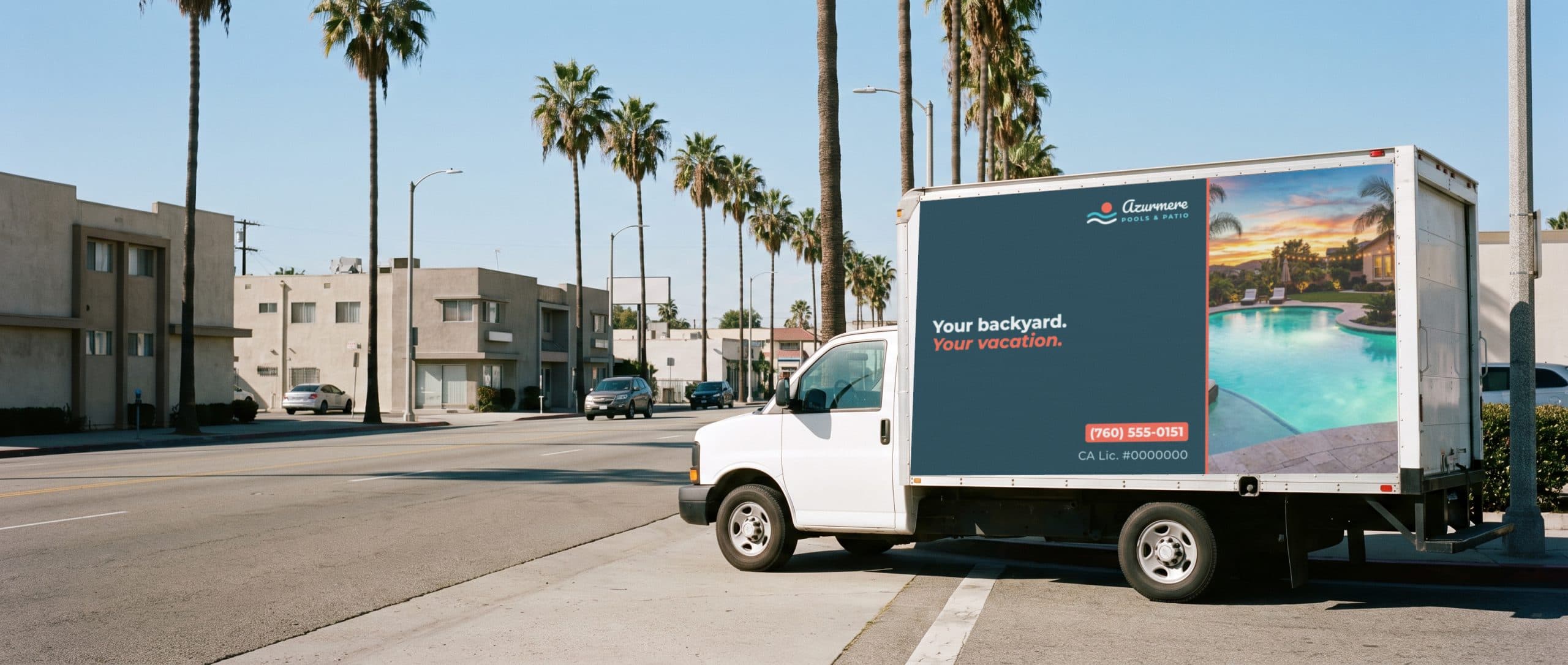
Are mobile billboards legal in California?
The short version: the state doesn't ban them, and it lets cities restrict them. Two sections of the California Vehicle Code do the work.
- Section 395.5 defines a "mobile billboard advertising display." Read it on the Legislature's site.
- Section 21100 lists what cities and counties may regulate by ordinance or resolution. Subdivision (l) covers mobile billboard advertising displays. Subdivision (o) covers advertising signs on motor vehicles parked on a public street. Read it here.
So the real rules live in city codes, and they differ from one city to the next. The ones we read for this guide all go after the same thing: parking. A sign trailer left at the curb for days is what most of these laws were written to stop.
Two things decide how the rules hit your campaign. First, what kind of vehicle carries the ad, because the state definition is narrower than most people assume. Second, which cities the route runs through, because each one can set its own rules and penalties.
This guide sticks to what the statutes and city codes say, with links to each. It's not legal advice, and the codes change. If a campaign matters to your business, read the current code yourself and ask the city or a lawyer.
What counts as a mobile billboard under Vehicle Code 395.5?
Here is the full text of section 395.5:
California Vehicle Code 395.5
A "mobile billboard advertising display" means an advertising display that is attached to a mobile, nonmotorized vehicle, device, or bicycle, that carries, pulls, or transports a sign or billboard, and is for the primary purpose of advertising.
The current wording dates to AB 1298, effective January 1, 2012. The bill's digest describes the old definition as covering displays "attached to nonmotorized vehicles," and says the bill revised it. Today's text names devices and bicycles as well.
Trailers, bikes and self-driven trucks
Read the definition closely. It names a nonmotorized vehicle, device or bicycle with a sign on it, used mainly to advertise. A sign trailer towed behind a pickup fits those words. So does a billboard pulled by a bicycle.
A sign mounted on a self-propelled truck isn't named in section 395.5. The section doesn't say how such a truck is treated, and we won't guess. City codes add their own wording, too. Los Angeles, for example, applies its parking rule to a display standing alone or attached to a motor vehicle, so the rule isn't limited to a trailer left on its own.
There's also a second state rule, covered next, that reaches advertising signs on any motor vehicle parked on a public street. That's why the type of vehicle matters less than people hope. Ask the seller exactly how their truck is built, and ask the city how it reads its own code.
What can cities regulate under Vehicle Code 21100?
Section 21100 opens: "Local authorities may adopt rules and regulations by ordinance or resolution regarding all of the following matters." Two items on that list matter here.
Subdivision (l): mobile billboard advertising displays. Cities and counties may regulate displays as defined in section 395.5, "including the establishment of penalties, which may include, but are not limited to, removal of the mobile billboard advertising display, civil penalties, and misdemeanor criminal penalties." An ordinance may also set a minimum distance a display has to be moved after a set time. That's the tool behind move-along rules.
Removal. Section 22651 lets an officer or parking enforcement employee remove a mobile billboard advertising display parked in violation of a local ordinance if the registered owner already got a warning citation for the same offense. Instead of posting street signs, a city may give notice with that warning citation, and it doesn't have to warn again before enforcing on a later violation.
Advertising signs on parked motor vehicles
Subdivision (o) is easy to miss. It lets cities regulate "advertising signs on motor vehicles parked or left standing upon a public street," and set a minimum distance the sign has to move after a set time. This rule is about motor vehicles, not trailers.
It doesn't apply to signs that are "permanently affixed" to the vehicle for permanent decoration, identification or display and that don't extend beyond the vehicle's overall length, width or height. The code defines permanently affixed as one of three things:
- Painted directly on the body of the vehicle.
- Applied as a decal on the body.
- Placed in a spot on the body that the vehicle's manufacturer specifically designed to hold an advertising sign, in compliance with state and federal law or guidelines.
There's a separate exception for dealer ads in a license plate frame. Whether a given truck's sign meets the permanently affixed test is a question for the city that writes the ticket, not for a seller's website.
Why ordinances cite 21100(m) and 21100(p)
If you read city codes, you'll see different letters. Before 2024, today's (l) was subdivision (m), and today's (o) was (p). AB 436, effective January 1, 2024, removed the subdivision on cruising, and the later letters moved up one. Section 22651 still refers to the old letters (m) and (p).
One more change is coming. AB 2453, approved by the Governor on September 20, 2026, amends section 21100 again and adds a new subdivision (p) about off-highway vehicles used by peace officers and first responders. It leaves the mobile billboard and parked-vehicle wording in (l) and (o) as it is. So when an older ordinance cites "21100(p)," it means the parked-vehicle advertising rule now in (o).
How California cities restrict mobile billboards
Here's what four city codes say, quoted from each city's published code. We picked cities whose rules are posted in full online. They show the pattern: the ban is on parking, a first offense usually gets a warning citation (Redlands and Rancho Cucamonga can skip it where signs are posted), and later offenses can mean towing, fines or a misdemeanor.
| City | Code section | What it prohibits | Enforcement |
|---|---|---|---|
| Redlands | Chapter 8.58 (Ord. 2765, 2011) | Parking a mobile billboard advertising display on any public street or city lands and rights of way | Removal after a warning citation (or posted signs); a later offense is a misdemeanor, up to $1,000 and/or 6 months |
| Santa Clarita | Chapter 12.84 (Ord. 11-7, 2011) | Parking a mobile billboard advertising display on any public street or public lands in the city | Removal after a warning citation; a later offense is a misdemeanor, $250 to $1,000 and/or up to 6 months |
| Rancho Cucamonga | Section 10.52.080 (Ord. 839, 2011) | Parking, standing or leaving a mobile billboard advertising display on any city street | Removal after a warning citation, or without one where signs are posted; the owner is subject to Vehicle Code impound and storage rules, including fees |
| Los Angeles | LAMC 87.53 | Parking a mobile billboard advertising display, standing alone or attached to a motor vehicle, on any public street or public land | Removal after a warning; a repeat offense is a misdemeanor |
As published in each city's code on the linked page, read October 3, 2026. Codes change; check the current version.
A few details worth noticing. Redlands, Santa Clarita and Rancho Cucamonga all adopted their rules in 2011, the same year the Legislature rewrote section 395.5. Santa Clarita's definition, adopted in April 2011, reads "a wheeled, mobile, nonmotorized vehicle" and doesn't list the devices and bicycles the state definition names today. Rancho Cucamonga's rule covers standing and leaving a display, not only parking it.
None of these four sections bans driving a mobile billboard through town. That doesn't mean no city does, or that a city can't add other rules. It means the codes we read target the curb. For how a truck rental works in practice, read our billboard truck rental guide.
Do you need a permit for a mobile billboard?
The Vehicle Code sections in this guide don't create a state permit for mobile billboards. They hand regulation to cities and counties, so any permit comes from the local level.
That can mean an event permit if the truck is part of a street event, a parking permit, or written permission from a property owner if the truck will sit on a private lot. It can also mean nothing at all, if the truck keeps moving through a city that only restricts parking. The only way to know is to read each city's code on the route and ask.
Ask the seller whether they pull any permits that are needed. Get it in writing: which permits apply in each city, who gets them, and who pays if the truck is cited or towed. A seller that answers "we follow all local rules" without naming the cities hasn't answered.
What to check before you book a mobile billboard truck
Here's the list we'd work through before paying for a single hour.
- Ask how the ad is carried. A towed trailer, a box truck with a frame, a printed sign on the body, or an LED screen. Section 395.5 names nonmotorized vehicles, and section 21100(o) exempts some permanently affixed signs on motor vehicles. The build matters.
- List every city on the route. Rules stop at the city line. A route that crosses three cities means three codes to read.
- Read each city's code. Search the city's municipal code for "mobile billboard" and "advertising sign." Most California cities publish their codes on American Legal (codelibrary.amlegal.com), eCode360 or Municode.
- Plan for parking. If the truck needs to sit, use a private lot with the owner's written permission. Assume public curbs are off limits until a city's code says otherwise.
- Ask about move-along rules. Section 21100 lets cities require a display or sign to move a set distance after a set time. Ask the seller how their drivers handle it.
- Settle who pays for tickets and tows. The codes above aim removal at the vehicle and its registered owner. Put who pays for a ticket, tow or impound in the contract.
- Check your own content rules. Some trades carry required lines on any ad, wherever it runs. Lawyers in California are one example: read law firm billboards.
- Get the answers in writing. Permits, cities, parking plan and who pays, in the agreement, before the first hour.
Not legal advice
This guide summarizes public code text as we read it on October 3, 2026. It isn't legal advice, and we don't review campaigns for legal compliance. Read Vehicle Code 21100 and each city's current code yourself, and talk to the city or a lawyer before you rely on any of it.
Outside California, the rules change completely. Some states restrict outdoor advertising far more than California does. Read states that banned billboards for the four state bans and what businesses use there instead.
Where garbage truck advertising fits
A rented billboard truck is one way to put an ad on the road. Our ads on trucks guide compares five, from wrapping your own vans to panels on city garbage trucks.
A garbage truck panel is a framed sign on the side of a city collection truck, not a wrap. Trucks rotate through the city's collection routes, with no route guarantee. In each city, every ad will be checked against that city's written ad policy before it runs. You can read how ads will be reviewed.
No city is open yet, and there is no Roadway advertiser case study yet. To see what a panel would look like, see your ad on a garbage truck, read how garbage truck advertising works, or join the list for your city.
Sources
- California Legislative Information: Vehicle Code section 395.5 (amended Stats. 2011, ch. 538)
- California Legislative Information: Vehicle Code section 21100 (amended Stats. 2023, ch. 803)
- California Legislative Information: Vehicle Code section 22651
- California Legislative Information: AB 1298 (2011), mobile billboard advertising displays
- California Legislative Information: AB 436 (2023), Vehicles
- California Legislative Information: AB 2453 (2026), Vehicles: off-highway motor vehicles
- City of Redlands Municipal Code: Chapter 8.58, Regulation of mobile billboard advertising displays
- City of Santa Clarita Municipal Code: Chapter 12.84, Regulation of mobile billboard advertising displays
- City of Rancho Cucamonga Municipal Code: Section 10.52.080, Parking of mobile billboard advertising displays prohibited
- Los Angeles Municipal Code: Section 87.53
Written by
Roadway Displays
Roadway Ad Network is a business line of Roadway Displays, which has built sign frames for refuse and recycling trucks since 1987. We make the frames and print the panels ourselves.
Published · Updated · About us